




Trend Following Performance Report - November, 2025

November 2025: Persistence Without Breadth
November delivered continued progress for systematic trend followers, but with diminishing breadth beneath the surface. The strong directional impulses seen earlier in the recovery phase moderated further, giving way to a market environment defined by persistence in a narrower set of trends rather than broad-based alignment. Momentum remained present, but it was selective, rewarding programs positioned in the right places rather than those relying on general market participation.
Equities continued to advance, though at a slower pace, while several commodity trends showed enough durability to support trend-following returns. At the same time, large portions of rates and currency markets remained mixed or range-bound, limiting cross-sector reinforcement. The result was a month where trend continuation mattered more than new signal generation, and where structural positioning outweighed tactical responsiveness.
This selective environment was reflected across the major benchmarks. Trend-following indexes remained positive for the month, but gains were more subdued than in October, consistent with a regime where opportunity clusters rather than expands. The benchmark results for November were as follows:
- TTU Trend Following Index: +0.87 percent for November (trailing 12 months −0.32 percent)
- SG Trend Index: +1.37 percent for November (trailing 12 months +1.96 percent)
- BTOP50 Index: +0.21 percent for November (trailing 12 months +2.71 percent)
- S&P 500 Total Return: +0.25 percent for November (trailing 12 months +15.01 percent)
The overall picture is one of continued recovery without broad confirmation. Trend-following programs that were already engaged in persistent trends were able to add incrementally to performance, while others experienced flatter outcomes as signal strength remained uneven across markets. Diversification continued to play a central role in stabilising results, even as dispersion increased between programs aligned with durable trends and those exposed to choppier conditions.
November did not represent a renewed acceleration in trend strength. Instead, it reinforced the importance of patience, discipline, and structural alignment during periods when markets advance unevenly. The month extended the recovery phase, but it did so quietly, reminding investors that trend persistence often develops in stages rather than through uniform momentum.
November 2025 Trend Index Performance
Trend-following performance in November continued to advance, but with noticeably narrower participation than in the prior month. While the major trend indexes remained positive, gains were more muted and increasingly dependent on the persistence of existing trends rather than the emergence of new directional opportunities. The market environment favoured continuity over expansion, reinforcing a selective regime rather than a broad trend resurgence.
Equity markets continued to provide incremental support, though momentum slowed, and several commodity trends maintained enough structure to contribute positively to performance. In contrast, rates and currency markets remained mixed, offering limited reinforcement across asset classes. This lack of cross-sector alignment constrained overall trend breadth and prevented the type of broad acceleration typically associated with stronger trend regimes.
Breadth remained the defining limitation beneath the surface. While some commodity exposures continued to exhibit durable behaviour, many markets oscillated within ranges, producing uneven signal quality. As a result, performance outcomes diverged more clearly between programs already positioned in persistent trends and those awaiting clearer confirmation. November therefore rewarded positioning and patience rather than signal responsiveness. The TTU Trend Following Index again underscored the value of long-tenured, diversified systematic programs. Its steady advance reflected the stabilising effect of diversification across enduring processes during periods when trend development unfolds unevenly. This resilience remains a hallmark of the trend-following space, particularly in transitional environments where trend persistence exists, but breadth has yet to fully reassert itself.
SG Trend Index
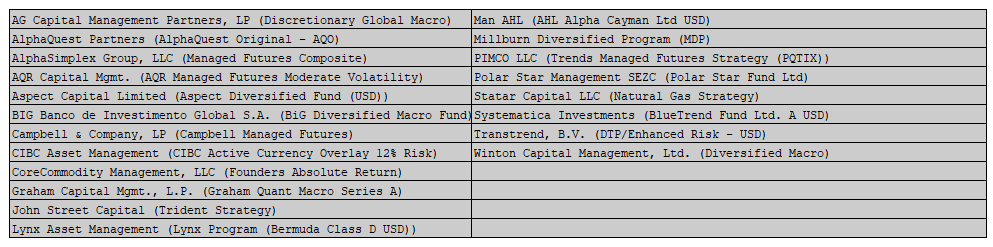
The SG Trend Index is designed to track the 10 largest trend following CTAs of the Managed Futures space.
Criteria for inclusion in the Index, as determined by Société Générale, are as follows:
• Must trade primarily futures (including FX forwards);
• Must be broadly diversified across asset classes;
• Must be an industry recognized trend follower;
• Must exhibit significant correlation to trend following peers;
• Must be open to new investment; and
• Must report returns on a daily basis (net of fees).
The index currently is:
• Equally weighted;
• Calculated in base currency;
• Has an inception date of 1st January 2000;
• Rebalanced annually on 1st January; and
• Reconstituted annually on 1st January based on eligibility criteria.
There was a slight modification to the Index from January 2013 to the present. Previously, the Programs needed to be a constituent of the SG CTA Index, and the 10 largest Managers were not a requirement.
For the 2025 year, following the rebalance of the Index, we say goodbye to the PIMCO LLC (Pimco Trends Managed Futures) Program and hello again to the Winton Capital Management (Winton Trend) Program. The listing of the 10 eligible programs in the Index for 2025 is as follows:

The SG Trend Index, which tracks the ten largest institutional trend-following CTAs, advanced 1.37 percent in November. The gain extended the recovery that began earlier in the quarter, though at a more measured pace than in October. Over the trailing twelve months, the index now stands at 1.96 percent, underscoring a gradual rebuilding of trend structure rather than a broad acceleration across markets.
The long-term characteristics of the SG Trend Index remain intact. Since inception, it has delivered a historical CAGR of 5.27 percent with a maximum drawdown of 20.61 percent, reflecting both the durability and the inherent cyclicality of large-scale systematic programs. These managers tend to benefit meaningfully when sustained trends reassert themselves, while their size and extensive diversification naturally dampen the amplitude of shorter-term fluctuations.
Since its launch in 2000, the SG Trend Index has maintained its role as a core institutional benchmark for trend-following performance. It consistently sits between the higher-returning TTU Trend Following Index and the broader BTOP50 Index, capturing the central tendency of the industry’s largest managers. Its high correlation of 0.95 with the TTU TF Index reinforces its usefulness as a barometer of collective institutional behaviour, even as its construction produces more moderated long-run returns relative to smaller or more aggressive trend-following composites.
The performance of the SG Trend Index since 1st January 2000 to the end of last month is seen in the chart below:
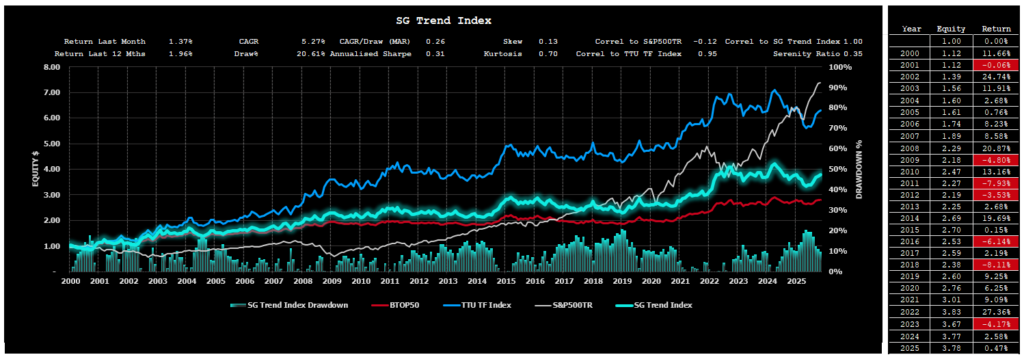
You will notice how the SG Trend Index is highly correlated with the BTOP50 Index and the TTU TF Index and uncorrelated with the S&P500TR Index.
Despite the high correlation between the various trend following Indexes, the long-term performance of these three Trend Following Indexes in terms of CAGR is different. The SG Trend Index plots between the BTOP50 Index and the TTU TF Index.
BTOP 50 Index
The BTOP50 Index seeks to replicate the overall composition of the managed futures industry with regards to trading style and overall market exposure. Unlike the SG Trend Index and the TTU TF Index, the BTOP50 is not strictly a trend following Index and is more broadly representative of the entire managed futures segment of which a dominant style is trend following. We like to think of the BTOP 50 as a ‘quasi trend following Index’ as opposed to a pure trend following Index.
Like the SG Trend Index, the BTOP50 Index is designed to track the performance of the largest Programs by AUM, however the Programs included may not be all Trend Following Programs.
Criteria for inclusion in the Index as determined by BarclayHedge is as follows:
• Must be a Program represented in the Barclay CTA Universe;
• In each Calendar year, the Programs selected must in aggregate be no less than 50% of the investable assets of the Barclay CTA Universe;
• The Programs must be open for investment;
• The Manager must be willing to provide Barclay Hedge with daily return performance;
• The Program must have at least two years of trading activity; and
• The Program’s advisor must have at least three years of operating history.
The index currently is:
• Equally weighted;
• Rebalanced annually on 1st January; and
• Reconstituted annually on 1st January based on eligibility criteria.
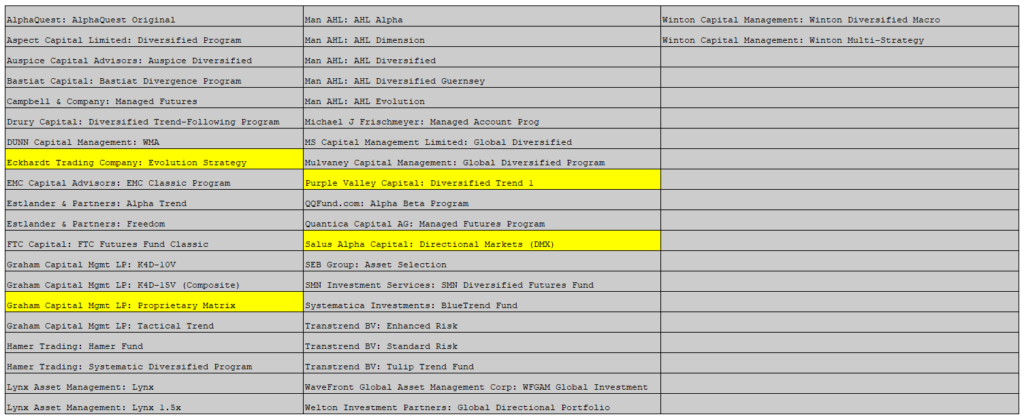
Despite the ’50’ tag in the BTOP 50 description, for 2025 there are 20 constituents in the Index.
The BTOP50 Index delivered a 0.21 percent gain in November, extending its gradual recovery but at a notably slower pace than the more trend-concentrated benchmarks. Over the trailing twelve months, the index now stands at 2.71 percent, reflecting steady participation in selective opportunities rather than broad directional alignment.
The long-term profile of the BTOP50 remains consistent with its design. Since inception, it has produced a historical CAGR of 4.04 percent with a maximum drawdown of 15.94 percent, reinforcing its reputation for stability and risk moderation. This reflects the index’s broad construction, which includes a wide mix of managed futures strategies beyond pure trend following.
November once again highlighted this structural trade-off. While trend-following exposure contributed positively, the BTOP50’s diversified mandate limited upside capture in an environment where gains were concentrated in a narrow set of markets. The result was a controlled, defensive performance that lagged more directional indexes but continued to provide ballast through uneven conditions.
As a benchmark, the BTOP50 remains a useful reference for managed futures exposure at large. It tends to respond reliably as trends begin to re-emerge, though without the convexity seen in more trend-focused composites. In selective environments like November, its value lies less in right-tail capture and more in preserving capital while maintaining measured participation.
The performance of the BTOP 50 Index since 1st January 2000 to the end of last month is seen in the chart below:
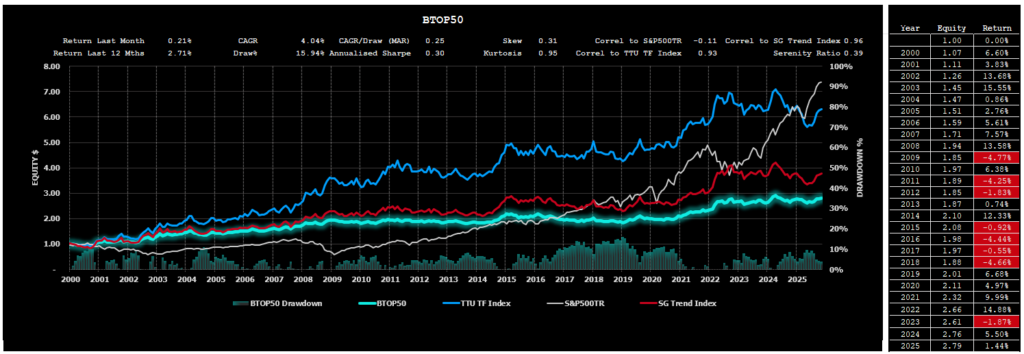
The BTOP 50 Index is highly correlated with the trend following Indexes of the SG Trend Index and the TTU TF Index, however its long-term performance is the lowest of the 3 Trend Following Indexes. While there is a significant representation of Trend Following Programs within the Index, the non-trend following Programs contribute to this diluted long-term performance.
TTU TF Index
The TTU TF Index has been developed by Top Traders Unplugged to provide a performance measure of the trend following programs with a long-term track record.
At TTU, we recognize the importance of a robust trading approach to these uncertain markets and feel that AUM is not a good robustness measure when it comes to assessing performance of the Trend Following industry. It is our strong opinion that the ultimate selection measure to apply in constituting a Trend Following Index is not AUM or a proxy risk metric such as the Sharpe, Sortino, MAR ratio, Ulcer Index or Serenity ratio. The superior metric to assess long-term performance is the long-term validated track record itself.
We have therefore developed a different method for constructing our TTU TF Index.
The criteria for inclusion into the TTU TF Index are as follows:
• Monthly performance results need to be captured in the Nilsson Hedge CTA database;
• Must be geographically diversified across asset classes;
• Must be fully systematic in nature using quantitative rules for entry and exit;
• Must possess at least a 15-year unbroken track record to the current reporting month;
• Must adopt trend following as their dominant investment strategy;
• Are currently active programs; and
• Must report performance monthly (net of fees).
The Index:
• Is Equally weighted;
• Is Rebalanced monthly;
• Is Reconstituted monthly;
• Has an inception date of 1st January 2000
As of November 30, 2025, the TTU Trend Following Index is composed of 42 active programs, each with a long-term, fully verified performance record. The monthly index return reflects the equal-weighted average performance of all programs reporting for the period. For November, 38 of the 42 programs submitted performance data by the reporting cut-off. The index therefore captures a broad cross-section of systematic trend-following behaviour, while maintaining continuity and consistency in its long-term construction.
The performance of the TTU TF Index since 1st January 2000 to the end of last month is as follows:
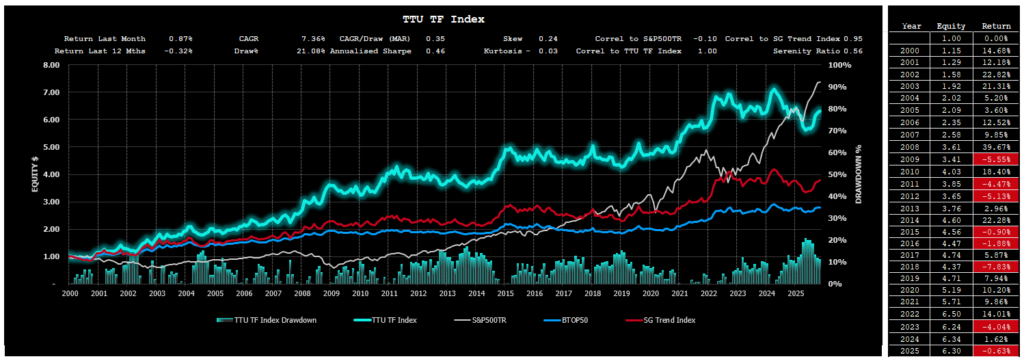
Now, you might be intrigued by the performance result of the TTU TF Index. While it is highly correlated with the BTOP 50 Index and the SG Trend Index, we can see that the long-term performance of the TTU TF Index clearly outstrips alternative Index measures.
The dominant contributor of this outperformance is the requirement for any participating Program in the Index to have a long-term track record. You see, using AUM as a criterion for inclusion is not necessarily a useful selection criterion. While AUM reflects ‘market appeal’, it does not imply that this ‘market appeal’ is strongly correlated with long-term performance.
Our process of Index construction gives us insight into how any diversified ensemble of trend-following Programs with a long-term track record approaches an optimal portfolio as we increase the number of Programs in the Index. Simply by diversifying into a large ensemble of Trend Following Programs with a long-term track record, we magically improve the Index result. CAGR is increased, and our drawdowns are reduced.
Of course, we already know this ‘diversification’ principle of Trend Following. As we increase our diversification efforts, we achieve improvements in both the maximum drawdown and the CAGR generated by the ensemble. This is why we seek to strive for maximum market and system diversification within our individual programs. The TTU TF Index takes diversification one step further by spreading across multiple TF Programs to deliver a superior risk-adjusted result.
TTU TF Index Performance
The TTU Trend Following Index, composed exclusively of long-tenured systematic trend programs, advanced 0.87 percent in November. The gain marked a modest continuation of the stabilisation process that has been unfolding since early Q4, even as broader trend conditions remained uneven. Over the trailing twelve months, the index now stands at −0.32 percent, underscoring that while short-term recovery is underway, the longer-term rebuilding of trend structure is still incomplete.
Despite this near-term softness, the long-term profile of the TTU TF Index remains intact and compelling. Since its inception in 2000, the index has delivered a CAGR of 7.36 percent with a maximum drawdown of 21.08 percent. These characteristics reflect the strength of its construction methodology, which prioritises the durability of verified track records over scale, popularity, or short-term risk statistics. By design, the index favours process integrity, persistence, and robustness, allowing it to endure extended drawdown phases while remaining positioned to benefit when sustained directional trends re-emerge.
The TTU TF Index continues to exhibit strong alignment with institutional benchmarks, maintaining a correlation of 0.95 with the SG Trend Index and 0.93 with the BTOP50 Index. Yet despite these close relationships, it has consistently delivered superior long-term risk-adjusted performance. This outcome highlights the advantage of focusing on managers with proven longevity and disciplined execution rather than those whose inclusion is driven primarily by assets under management or prevailing market appeal.
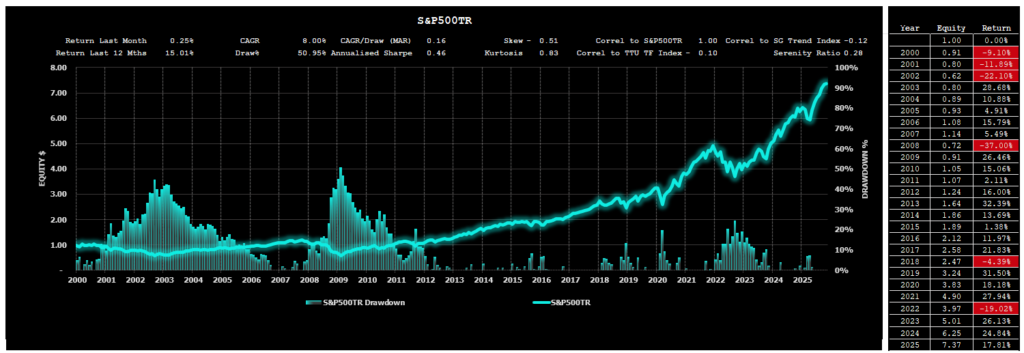
For comparison, the S&P 500 Total Return Index rose 0.25 percent in November and now stands at 15.01 percent over the trailing twelve months. Since 2000, the S&P 500 TR has produced a CAGR of 8.00 percent, but with a substantially larger maximum drawdown of 50.95 percent. This contrast continues to reinforce the role of trend following as a structural diversifier, particularly during periods when equity markets deliver strong headline returns alongside elevated valuation risk and asymmetric downside exposure.
TTU Trend Barometer
The TTU Trend Barometer closed November at 48, marking a meaningful improvement from the prior month and signalling a transition toward a more constructive trend-following environment. While still below the threshold associated with fully favourable conditions, the rise indicates that trend participation broadened during the month and that directional persistence is becoming more reliable across a wider set of markets.
The Barometer, which measures the persistence of price trends across 44 global futures markets, showed clearer signs of balance emerging beneath the surface. Equity indices continued to provide structural support, energy markets maintained their stabilisation, and several commodity sectors exhibited more coherent directional behaviour. These developments contributed to the upward shift in the Barometer, even as fixed income and currency markets remained mixed and prevented a full move into a strong trend regime.
As always, the Barometer reflects end-of-month conditions and does not capture all intra-month volatility. Even so, November’s reading suggests that systematic trend programs are gaining firmer footing as trend structure continues to rebuild. The environment remains transitional rather than fully aligned, but the improvement reinforces the view that the opportunity set for trend followers is expanding rather than contracting as the year draws to a close.
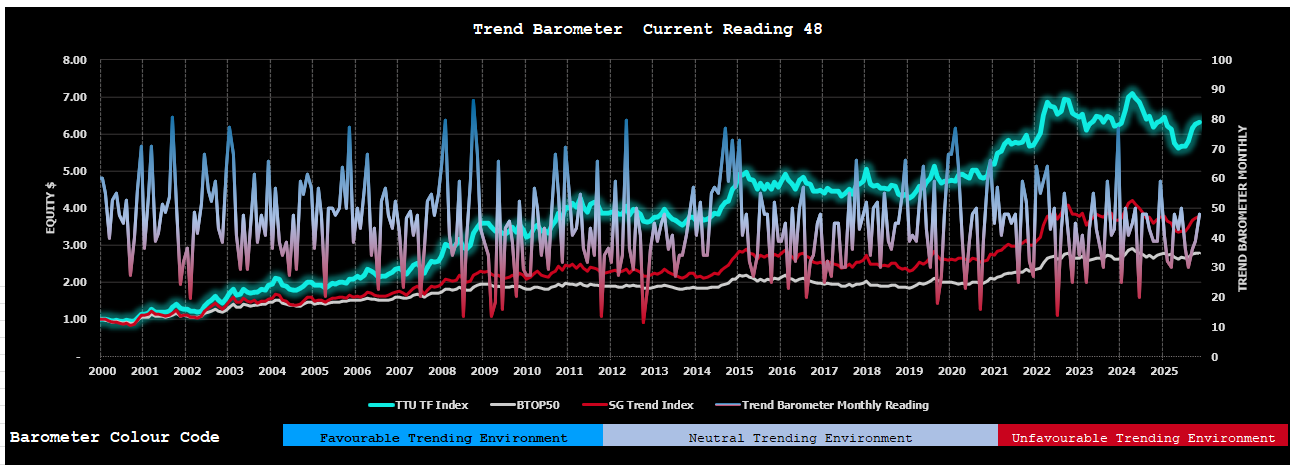
The Trend Barometer is a proprietary tool we use at TTU to assess the trend strength of a diversified portfolio consisting of 44 markets across all sectors. We firstly subdivide the trend strength of each market of a hypothetical diverse portfolio into five ranges from strong up, medium up, neutral, medium down and strong down. We then aggregate these results into a single portfolio number which we use to describe the overall trend strength across a hypothetical Program portfolio.
We then arbitrarily divide this percentage range into 3 where a value of 0-30 is considered a very unfavorable market regime for trend following Programs, a range between 30 to 55 is a somewhat neutral environment for Trend Following Programs (but not an environment where you could expect consistent performance) and values more than 55 are considered to be a favorable regime towards Trend Following Programs, where they should see good performance.
Aside from the occasional dispersed readings when compared to overall trend following performance, this method is surprisingly powerful in describing CTA monthly performance and can be used to connect market trading environments to resultant Manager performance.
The Macro Environment
For a blow-by-blow macro wrap for the month, we recommend you listen to our weekly systematic investor series by clicking on the links below. It is also worthwhile listening to our past catalogue as it provides you with an understanding of how these markets can shape the emotions of a Trader and why it is therefore essential that Trend Followers adopt systematic rules-based processes to keep these emotions in check.
You can find all of our weekly conversations by clicking this link.
Top 10 Lists
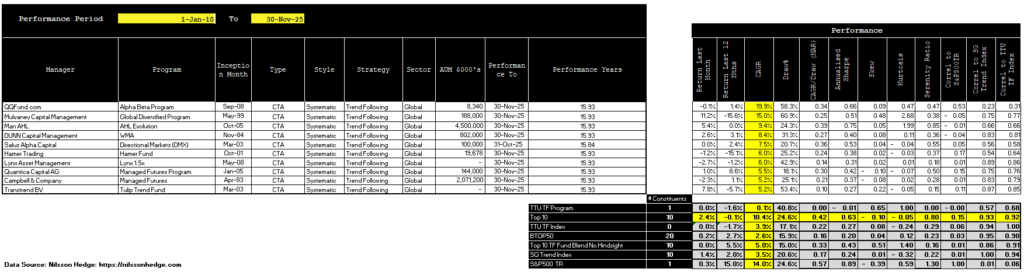
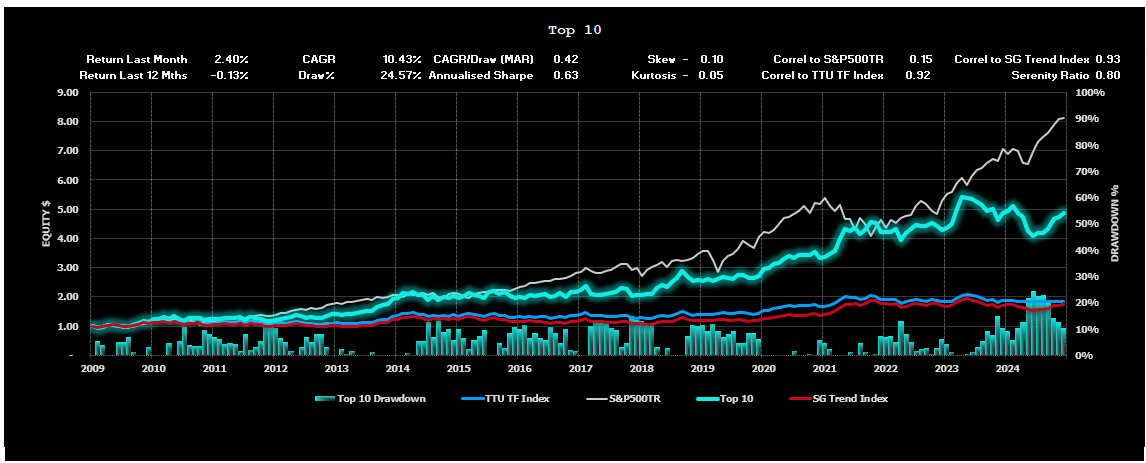
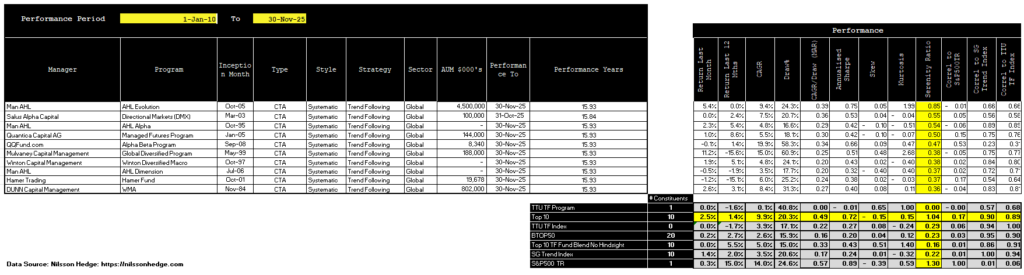
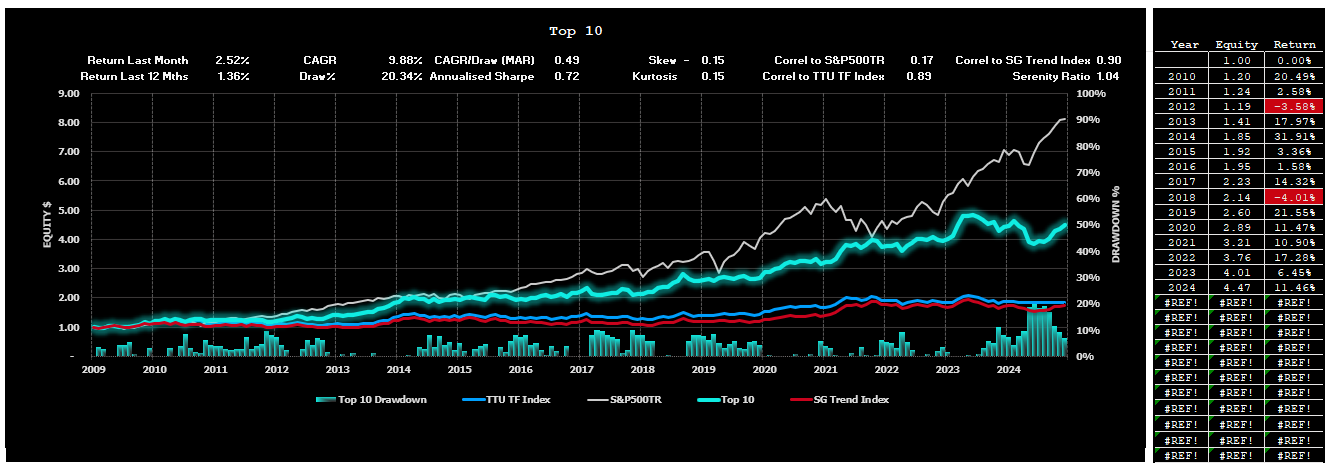
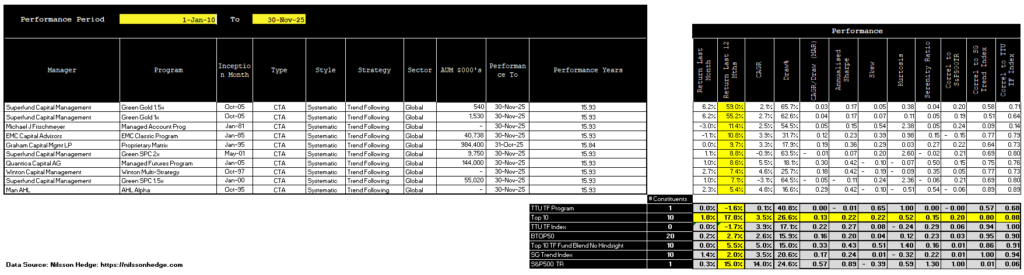
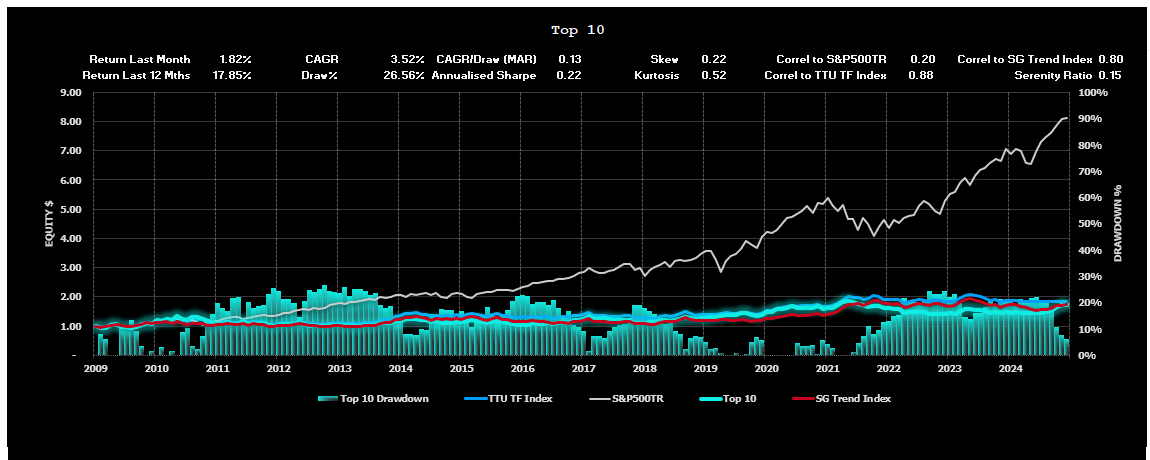
We have prepared the following Top 10 lists (excluding non-reporting Programs) for various performance categories based on monthly performance returns for a 15-year period, commencing January 1, 2010, to the current month.
Top 10 Listing – by Compound Annual Growth Rate
Top 10 Listing – by Risk Adjusted Return (Serenity Ratio)
Top 10 Listing – by Last 12 months Performance
Performance Results for the TTU Top 5 by Serenity Ratio
In a research project we undertook at TTU, we examined three different allocation methods that could be deployed by an investor seeking to optimally allocate investment funds towards 5 of the top-ranked Globally Diversified Systematic Trend Following Programs with a long-term track record.
These three methods adopted 3 different forms of performance metric, namely:
- Top 5 Performers by Compound Annual Growth Rate (CAGR) using a rolling lookback of 15 years.
- Top 5 Performers by MAR ratio (CAGR/Max Draw%) using a rolling lookback of 15 years.
- Top 5 Performers by Serenity Ratio using a rolling lookback of 15 years.
The findings of our project can be obtained by clicking on this link.
Our research determined that the optimal selection method was the Serenity Ratio method.
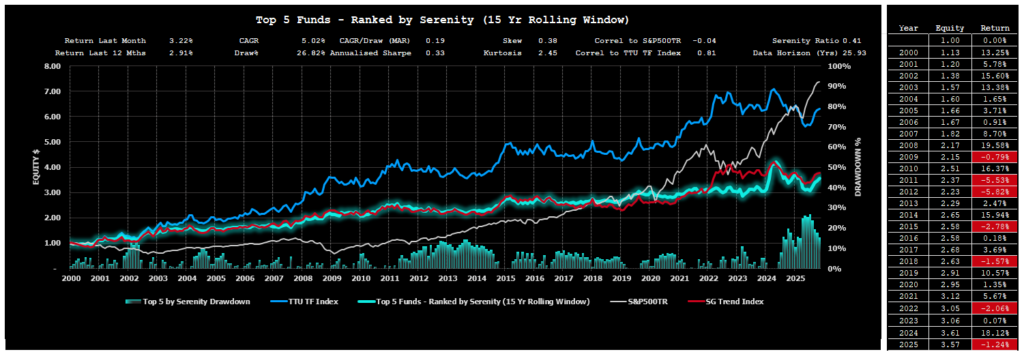
The Serenity Top 5 Selection Method delivered a strong 3.22 percent gain in November, marking its most decisive advance in recent months and reinforcing the gradual recovery that began in late Q3. Over the trailing twelve months, the composite now stands at 2.91 percent, reflecting improving trend persistence across several core sectors as directional structure continues to firm.
November’s result highlights the strength of disciplined diversification within the Serenity framework. Long-tenured programs with stable, process-driven approaches contributed meaningfully as trend signals became more coherent, even though the broader opportunity set remains transitional rather than fully aligned. The performance underscores how Serenity-selected managers are positioned to respond effectively as trends re-emerge, without relying on aggressive risk expansion.
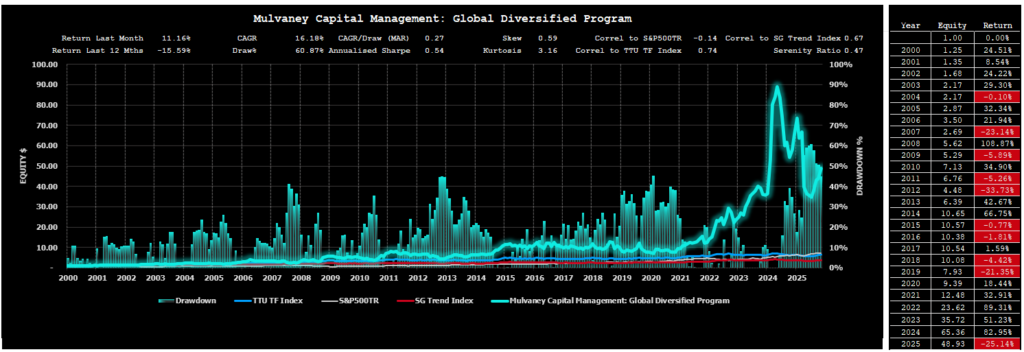
Following the annual reconstitution earlier this year, Mulvaney Capital Management’s Global Diversified Program continues to be the primary source of variability within the portfolio. Its high-convexity profile once again amplified portfolio outcomes, contributing positively during November as directional moves strengthened. This behaviour remains a defining feature of the Serenity composite, introducing controlled variability while preserving long-term asymmetry.
The Serenity Ratio continues to prove effective as a manager selection tool by prioritising durability, drawdown control, and long-term persistence over short-term performance metrics. Across the full reporting horizon, the Serenity composite has delivered a CAGR of 5.02 percent with a maximum drawdown of 26.82 percent, while maintaining a low correlation of −0.04 to the S&P 500 Total Return Index. These characteristics reinforce its role as a structural diversifier within multi-asset portfolios, particularly during periods when traditional asset class behaviour becomes uneven or unstable.
The 2025 Serenity selection is as follows and will be maintained for the investment period between 1st February 2025 to 31st January 2026:
- Man AHL: AHL Evolution;
- Man AHL: AHL Alpha;
- Mulvaney Capital Management: Global Diversified Program;
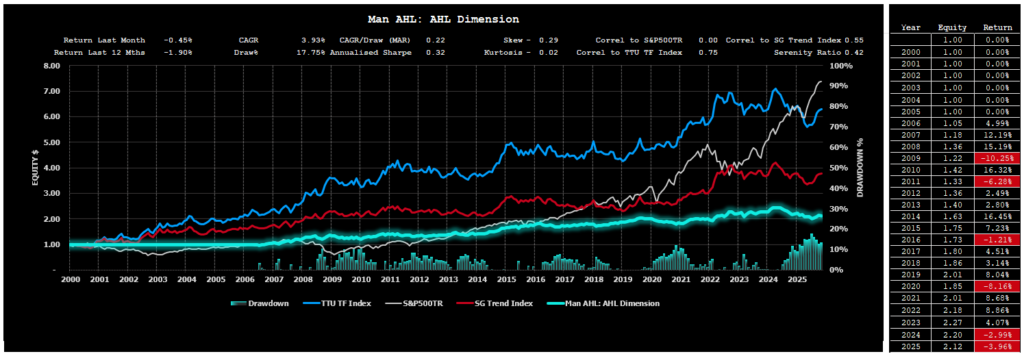
- Man AHL: AHL Dimension; and
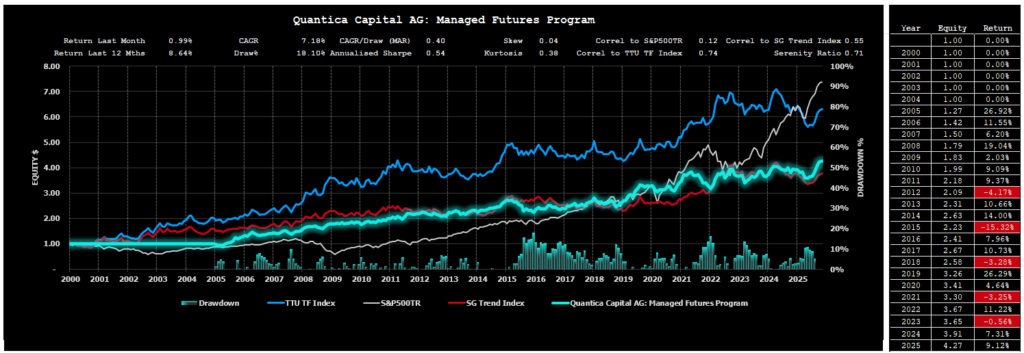
- Quantica Capital AG: Managed Futures Program.
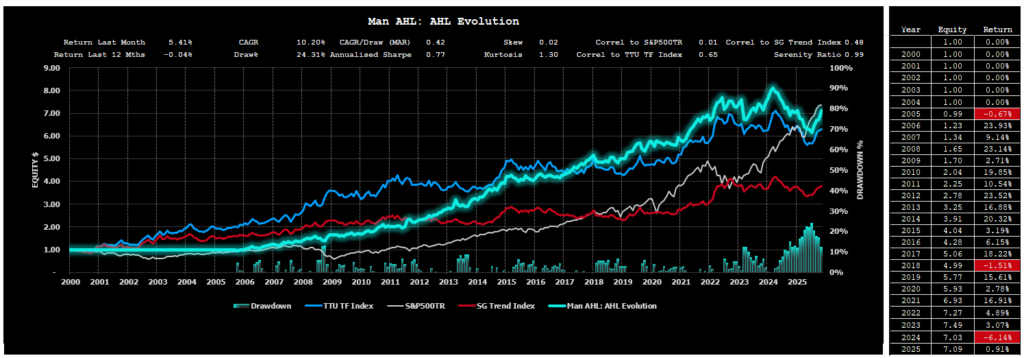
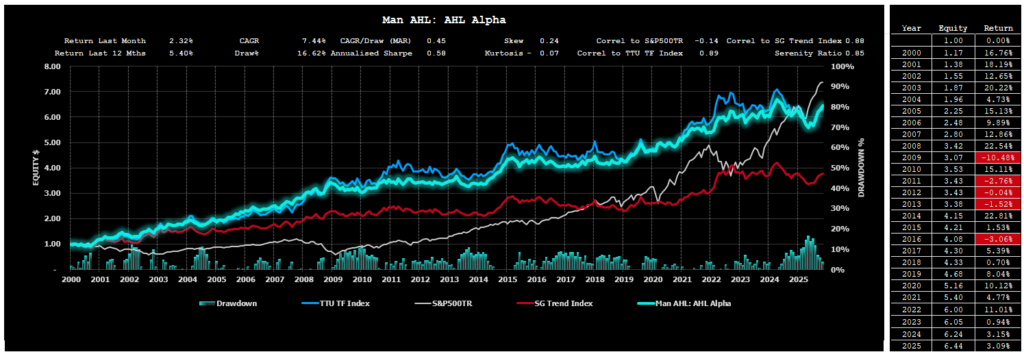
Individual Performance Results for the 5 Programs used for the Serenity allocation to the reporting month using the 2025 listing are as follows:
Performance Results for the Alternative 60/40 portfolio using the TTU Top 5 by Serenity Ratio
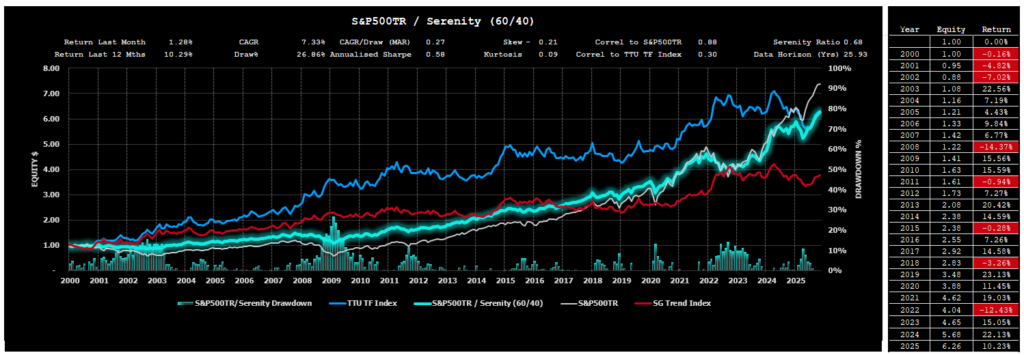
In our “How to Invest with the Best” blog post, we also highlighted the significant improved risk-adjusted performance results that could be achieved by replacing the 40% allocation to Bonds in the traditional 60/40 portfolio with an allocation of 40% towards the TTU Top 5 by Serenity ratio.
The evaluation compared the performance of a traditional 60% Equity/40% Bond portfolio against a 60% Equity/40% Serenity portfolio to highlight the uncorrelated historical nature of this Alternative 60/40 portfolio and demonstrate the benefits that a sizeable allocation towards the Serenity portfolio would bring to an investor if equity and bond markets go back to their historic relationship and become more positively correlated in the future. There is no guarantee that correlations remain static over time and it is possible that bond markets and equity markets may lose their uncorrelated relationship that has existed in the last 20 years or so. It is far less likely that the TF managers within the Serenity Grouping will ever be strongly positively correlated to the Equities market, over the long run, given the extensive global diversification and ability to go long and short, that is present within the constituents of the Serenity Grouping.
Chart 21 below showcases the comparative performance results for the period 1 January 2000 to the end of last month:
- A 100% investment in the S&P500TR portfolio;
- A 100% investment in the VBMFX which is a proxy for the bond market;
- A 100% investment in the VBIAX which is a suitable proxy for the classic 60% Equity/40% Bond portfolio;
- A 100% investment in a 60% S&P500TR 40% Serenity portfolio; and
- A 100% investment in the Serenity Portfolio.
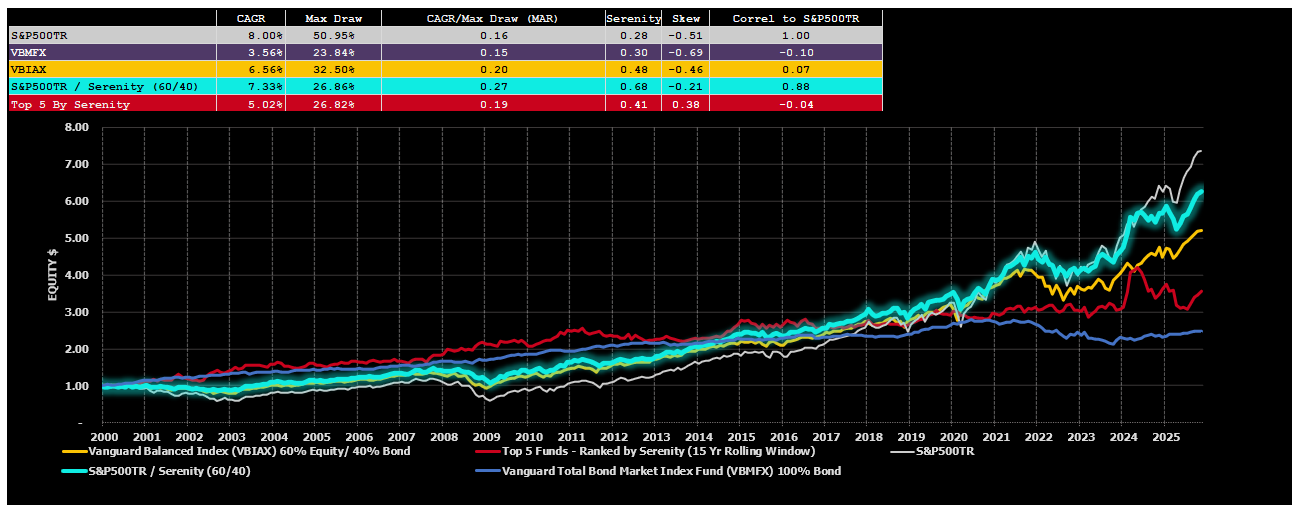
The comparison of alternative portfolio allocations above highlights the strong historic risk adjusted returns that have been enjoyed by 60% S&P500TR / 40% Serenity Composite Portfolio.
A more detailed assessment of this powerful 60/40 investment option is reflected below.
Important Disclaimers
This document is directly solely to Accredited Investors, Qualified Eligible Participants, Qualified Clients and Qualified Purchasers. No investment decision should be made until prospective investors have read the detailed information in the fund offering documents of any manager mentioned in this document. This document is furnished on a confidential basis only for the use of the recipient and only for discussion purposes and is subject to amendment This document is neither advice nor a recommendation to enter into any transaction. This document is not an offer to buy or sell, nor a solicitation of an offer to buy or sell, any security or other financial instrument. This presentation is based on information obtained from sources that TopTradersUnplugged (“TTU”) (“considers to be reliable however, TTU makes no representation as to, and accepts no responsibility or liability for, the accuracy or completeness of the information. TTU has not independently verified third party manager or benchmark information, does not represent it as accurate, true or complete, makes no warranty, express or implied regarding it and shall not be liable for any losses, damages, costs or expenses relating to its adequacy, accuracy, truth, completeness or use.
All projections, valuations, and statistical analyses are provided to assist the recipient in the evaluation of the matters described herein. Such projections, valuations and analyses may be based on subjective assessments and assumptions and may use one among many alternative methodologies that produce different results accordingly, such projections, valuations and statistical analyses should not be viewed as facts and should not be relied upon as an accurate prediction of future events. There is no guarantee that any targeted performance will be achieved Commodity trading involves substantial risk of loss and may not be suitable for everyone
TTU is not and does not purport to be an advisor as to legal, taxation, accounting, financial or regulatory matters in any jurisdiction. The recipient should independently evaluate and judge the matters referred to herein. TTU does not provide advice or recommendations regarding an investor’s decision to allocate to funds or accounts managed by any manager (“or to maintain or sell investments in funds or accounts managed by any manager, and no fiduciary relationship under ERISA is created by the investor investing in funds or accounts managed by any manager, or through any communication between TTU and the investor
In reviewing this document, it should be understood that the past performance results of any asset class, or any investment or trading program set forth herein, are not necessarily indicative of any future results that may be achieved in connection with any transaction. Any persons subscribing for an investment must be able to bear the risks involved and must meet the suitability requirements relating to such investment. Some or all alternative investment programs discussed herein may not be suitable for certain investors This document is directed only to persons having professional experience in matters relating to investments. Any investment or investment activity to which this document relates is available only to such investment professionals. Persons who do not have professional experience in matters relating to investments should not rely upon this document.
This document and its contents are proprietary information of TTU and may not be reproduced or otherwise disseminated in whole or in part without TTU’s prior written consent.
This document contains simulated or hypothetical performance results that have certain inherent limitations AND SHOULD BE VIEWED FOR ILLUSTRATIVE PURPOSES. Unlike the results shown in an actual performance record, these results do not represent actual trading. HYPOTHETICAL PERFORMANCE RESULTS HAVE MANY INHERENT LIMITATIONS, SOME OF WHICH ARE DESCRIBED BELOW. NO REPRESENTATION IS BEING MADE THAT ANY ACCOUNT WILL OR IS LIKELY TO ACHIEVE PROFITS OR LOSSES SIMILAR TO THOSE SHOWN IN FACT, THERE ARE FREQUENTLY SHARP DIFFERENCES BETWEEN HYPOTHETICAL PERFORMANCE RESULTS AND THE ACTUAL RESULTS SUBSEQUENTLY ACHIEVED BY ANY PARTICULAR INVESTMENT ACCOUNT.
ONE OF THE LIMITATIONS OF HYPOTHETICAL PERFORMANCE RESULTS IS THAT THEY ARE GENERALLY PREPARED WITH THE BENEFIT OF HINDSIGHT IN ADDITION, HYPOTHETICAL TRADING DOES NOT INVOLVE FINANCIAL RISK, AND NO HYPOTHETICAL TRADING RECORD CAN COMPLETELY ACCOUNT FOR THE IMPACT OF FINANCIAL RISK IN ACTUAL TRADING FOR EXAMPLE, THE ABILITY TO WITHSTAND LOSSES OR TO ADHERE TO A PARTICULAR TRADING PROGRAM OR OTHER ASSET.
There are numerous other factors related to the markets in general or to the implementation of any specific trading program which cannot be fully accounted for in the preparation of hypothetical performance results and all of which can adversely affect actual trading results. No representation is being made that any investment will or is likely to achieve profits or losses similar to those being shown.
Most Comprehensive Guide to the Best Investment Books of All Time

Most Comprehensive Guide to the Best Investment Books of All Time
Get the most comprehensive guide to over 600 of the BEST investment books, with insights, and learn from some of the wisest and most accomplished investors in the world. A collection of MUST READ books carefully selected for you. Get it now absolutely FREE!
Get Your FREE Guide HERE!